Why Anxiety Causes Shaking: Science, Symptoms & How to Stop It
Why Anxiety Causes Shaking: Science, Symptoms & How to Stop It
Have you ever been sitting in a waiting room, about to walk into a job interview, or lying in bed replaying a stressful conversation, and suddenly noticed your hands trembling? Your legs feel restless. Your body seems to buzz with a kind of nervous electricity you can’t switch off. If that sounds familiar, you are not alone. I’ve spoken with so many people who describe this exact experience and feel embarrassed or frightened by it, not realizing how incredibly common it is.
Anxiety causes shaking in a surprisingly large number of people. While it can feel alarming, it is a natural biological response, not a sign that something is seriously wrong. Once I started understanding why my body did this, it became a lot less scary. And that’s exactly what this article is here to do.
We’ll break down the science behind anxiety-induced tremors, explore why they get worse at night, and share honest, practical strategies to help you feel more in control.
What is Anxiety?
Understanding Anxiety as a Natural Response
Anxiety Causes Shaking is your body’s built-in alarm system, a survival mechanism that evolved to protect you from danger. When your brain perceives a threat (real or imagined), it triggers the fight-or-flight response, flooding your system with stress hormones and preparing you to either face the danger or run from it.
Normal anxiety is temporary and proportional to the situation. An anxiety disorder, on the other hand, involves persistent, excessive worry or fear that interferes with daily life. Whether you experience occasional nerves or a diagnosed disorder, the physical symptoms, including shaking, can feel just as real and just as overwhelming either way.
Common Physical Symptoms of Anxiety
Anxiety doesn’t just live in your head. It shows up in the body in ways that can catch you completely off guard:
- Rapid or pounding heartbeat
- Sweating and hot flashes
- Shortness of breath or chest tightness
- Nausea or upset stomach
- Shaking and trembling, one of the most common and distressing symptoms
Scientific Explanation: Why Anxiety Causes Shaking
The Role of the Brain
It all starts in the amygdala, the brain’s fear-processing center. When it detects a potential threat, whether it’s a looming deadline, a difficult conversation, or even a worrying thought, it sends an immediate distress signal to the hypothalamus. The hypothalamus acts like a command center, activating the body’s stress response and signaling the rest of the nervous system to get ready.
This happens in milliseconds, often before your conscious mind even registers what’s going on. By the time you think “wait, why am I nervous?”, your body is already several steps ahead of you.
Hormonal Surge: Adrenaline & Cortisol
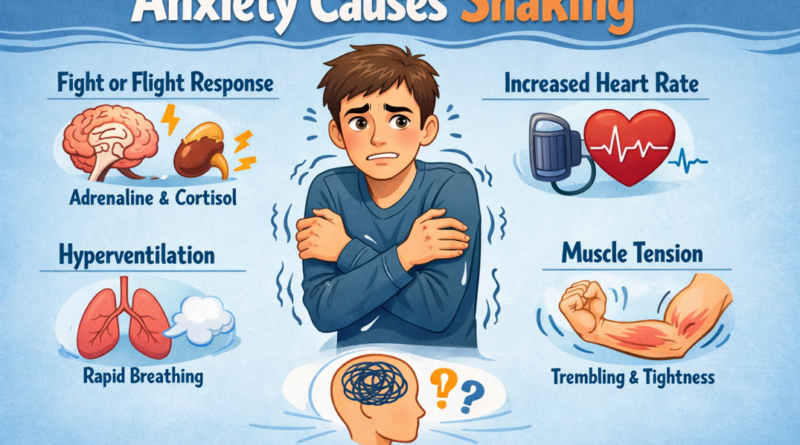
Once that signal fires, the adrenal glands release a surge of stress hormones, primarily adrenaline (epinephrine) and cortisol. Adrenaline shaking anxiety is a well-documented phenomenon: the hormone rapidly increases heart rate, dilates airways, and reroutes blood to the muscles in preparation for physical action.
Cortisol, released slightly later, keeps the stress response going. When these hormones flood the system, the muscles are put on high alert, primed for explosive movement that never actually comes. The result? Uncontrolled trembling. Your body built up all this energy for a threat it never got to physically respond to.
Nervous System Activation
The sympathetic nervous system, the one responsible for fight-or-flight, becomes highly activated during Anxiety Causes Shaking. It sends rapid electrical signals to the muscles, heart, and organs. When this activation becomes excessive or prolonged, it manifests as involuntary tremors. Think of it like revving a car engine while it’s in park. The energy has to go somewhere, and shaking is often where it goes.
Muscle Response and Trembling
Why Muscles Start Shaking
Under stress, your muscles tense up and fire rapidly, a reflex designed to give you speed and strength in a dangerous situation. But when there is no physical outlet for that tension (you’re not running, you’re not fighting, you’re just sitting at your desk), the built-up energy causes muscles to fire repeatedly and erratically. This shows up as visible shaking, especially in the hands, legs, and jaw.
Why Anxiety Tremors Feel Uncontrollable
Here’s the part that used to frustrate me most: no matter how hard you try to hold your hand still, it just keeps trembling. That’s because anxiety tremors are involuntary. Your body is in action mode, and that temporarily overrides your fine motor control. The neurological and hormonal forces at play are stronger in that moment than your conscious effort to stop them. It’s not weakness. It’s biology.
Anxiety Tremors at Night
Why Anxiety Gets Worse at Night
So many people tell me their anxiety feels manageable during the day but becomes overwhelming the moment they lie down. During the day, work, conversations, and daily tasks keep anxious thoughts from taking over. At night, with no distractions, the mind fills the silence with worry.
Cortisol also follows a natural daily rhythm, and disruptions to this pattern, which are very common in people with anxiety, can lead to elevated stress hormones in the evening, triggering physical symptoms like tremors right when you’re trying to rest.
Anxiety Shaking at Night and Sleep Disturbances
Nighttime anxiety tremors and insomnia feed each other in a frustrating loop. The stress response makes it hard to fall asleep. The sleep deprivation makes the anxiety worse. In some cases, physicians may prescribe sleep aids such as Ambien (zolpidem) to help interrupt this cycle, but these are meant to be used short-term, under medical supervision, and as part of a wider treatment plan rather than a standalone fix.
How to Stop Shaking from Adrenaline
Immediate Techniques
When you feel the shaking start, try these to calm your nervous system in the moment:
- Deep breathing: Slow, controlled breathing, inhale for 4 counts, hold for 4, exhale for 6, activates the parasympathetic nervous system and directly counters the adrenaline response. It sounds almost too simple, but it genuinely works.
- Grounding exercises: The 5-4-3-2-1 technique (name 5 things you can see, 4 you can touch, 3 you can hear, 2 you can smell, 1 you can taste) pulls your attention out of your head and back into the present moment.
- Progressive muscle relaxation: Deliberately tensing and then releasing muscle groups from head to toe helps discharge the built-up physical tension that’s causing the trembling.
Long-Term Strategies
For lasting change, these are worth building into your lifestyle:
- Regular exercise: Moving your body regularly helps burn off excess adrenaline and cortisol and lowers your baseline anxiety over time. Even a 20-minute walk makes a real difference.
- Cognitive Behavioral Therapy (CBT): CBT is one of the most thoroughly researched treatments for anxiety. It helps you catch and reframe the thought patterns that keep setting off your stress response in the first place.
- Lifestyle adjustments: Cutting back on caffeine, keeping a consistent sleep schedule, and having people around you who you can talk to all add up more than most people expect.
Medications and Medical Support
Anti-Anxiety Medications
For severe anxiety symptoms, a doctor may prescribe short-term medications such as benzodiazepines (for example, Xanax/alprazolam). These work quickly to settle the nervous system and reduce tremors, but they carry a risk of dependence and are not meant to be a long-term solution. Always use them exactly as prescribed and have an honest conversation with your doctor about your options.
Sleep and Anxiety Medications
For people struggling with severe nighttimeb Anxiety causes shaking and disrupted sleep, medications like Ambien (zolpidem) may be recommended short-term. They work best when combined with therapy and lifestyle changes rather than used alone.
Lercanidipine and Anxiety
Lercanidipine is a blood pressure medication, not an anxiety treatment. That said, because Anxiety Causes Shaking, elevated heart rate, and rising blood pressure, managing those physical symptoms sometimes takes a little pressure off the overall stress load on the body. If you’ve been prescribed lercanidipine for another reason, never adjust or stop it without speaking to your doctor first.
When Should You Be Concerned?
Signs It May Be More Than Anxiety
Anxiety is a common cause of shaking, but not every tremor is anxiety-related. It’s worth seeing a doctor if your shaking:
- Persists even when you feel calm
- Is getting progressively worse
- Gets in the way of everyday tasks like writing, eating, or working
- Comes with other symptoms like weakness, coordination issues, or slurred speech
When to Seek Medical Help
A healthcare professional can rule out other causes such as essential tremor, Parkinson’s disease, thyroid disorders, or blood sugar issues. Getting a proper diagnosis matters, both to rule out anything serious and to make sure you’re getting the right kind of support.
Evidence-Based Coping Techniques
Mindfulness and Relaxation
Mindfulness meditation has real, research-backed benefits for anxiety, including physical symptoms like Anxiety Causes Shaking. When your mind is overwhelmed, your body often reacts through trembling, restlessness, or tension this is where mindfulness can help restore balance. Even 10 minutes a day of focused breathing or a simple body scan can gradually lower cortisol levels and calm an overactive nervous system, reducing symptoms linked to Anxiety Causes Shaking.
Therapy and Behavioral Approaches
CBT remains the gold standard for Anxiety Causes Shaking treatment. It helps you question the thoughts that are triggering your stress response and teaches your nervous system, through gradual exposure, that the things you fear aren’t actually as dangerous as they feel. Stress management skills like journaling, setting boundaries, and managing your time better can also reduce how often anxiety flares up.
Healthy Lifestyle Choices
Small, consistent choices matter more than dramatic overhauls:
- Balanced diet: Stable blood sugar from whole foods, lean proteins, and vegetables supports steadier moods and less reactive stress responses.
- Sleep hygiene: A regular sleep schedule, a cool and dark room, and limiting screens before bed all support healthier cortisol rhythms.
- Limiting caffeine and stimulants: Caffeine directly stimulates the nervous system. If you’re prone to anxiety tremors, reducing your intake (especially after midday) can make a noticeable difference.
Conclusion
Anxiety causes shaking because of a chain reaction your body triggers without asking your permission. The brain perceives a threat, stress hormones flood in, the nervous system fires up, and the muscles tremble under energy that has nowhere to go. It is uncomfortable, sometimes mortifying, and often scary. But it is not dangerous, and it is not permanent.
If you’re unsure whether your tremors are anxiety-related or something else, please do talk to a doctor. You deserve clarity, not just reassurance