How High Can Anxiety Raise Heart Rate?
How high can anxiety raise the heart rate?
Anxiety is not only a mental feeling of worry or stress; it can also create strong physical reactions in the body. One of the most noticeable symptoms is a sudden rise in heart rate, which can feel intense or even frightening for many people. Learning why this happens can make it easier to manage and reduce fear during episodes.
When anxiety starts, the body activates its natural “fight or flight” response. This is a built-in survival system. When your brain thinks there is danger (even if it’s not real), it releases stress hormones like adrenaline. These hormones prepare your body to react quickly by increasing heart rate, speeding up breathing, and tightening muscles.
People often search for answers when they experience symptoms like anxiety raise heart rate especially when it feels overwhelming or unfamiliar. The good news is that while it can feel scary, it is usually not dangerous on its own.
How much does anxiety increase heart rate?
A normal anxiety raise heart rate is generally between 60 and 100 beats per minute (bpm). During anxiety or panic episodes, however, the heart rate can rise significantly above this range.
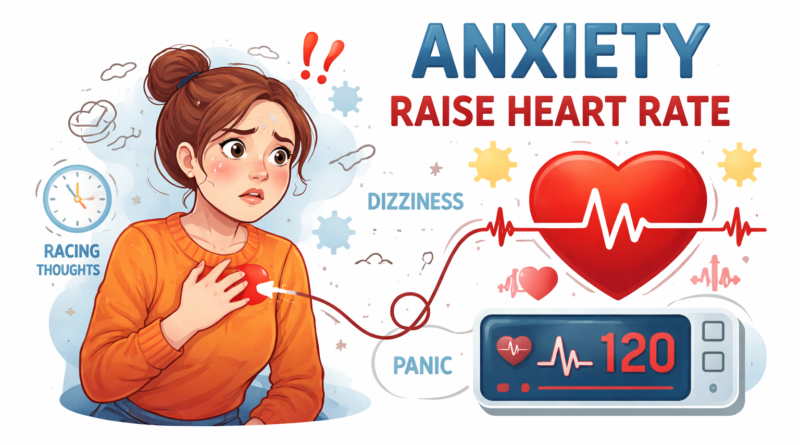
In mild to moderate anxiety, many people may notice their heart rate reaching around 110–120 bpm. During stronger anxiety or panic attacks, it can increase further, sometimes reaching 130 bpm or more. In severe panic situations, some individuals may even experience heart rates close to 140–150 bpm.
Although this can feel scary, it is typically the body’s natural stress response rather than a sign of immediate danger. The heart is simply reacting to signals from the nervous system, even when there is no real physical threat.
Many people worry that an anxiety raise heart rate means a heart condition. In most cases, it does not. However, if rapid heart rate episodes happen frequently, last a long time, or are accompanied by chest pain or dizziness, it is important to consult a healthcare professional for proper evaluation.
In some cases, doctors may recommend anxiety management techniques or medications to help control symptoms, depending on severity
How to Stop Heart Palpitations Due to Anxiety
Heart palpitations connect to anxiety are often described as racing, pounding, or irregular heartbeats. While these sensations are usually not harmful, they can feel very restless and alarming.
In some cases, anxiety raise heart rate can also make palpitations feel more intense and frightening.
1. Controlled Breathing
Slow, deep breathing can help calm the nervous system. Try inhaling for 4 seconds, holding for 4 seconds, and exhaling slowly for 6–8 seconds. This helps reduce the body’s stress response.
2. Grounding Exercises
Bring your attention back to the present moment by focusing on your surroundings. For example, identify things you can see, touch, hear, and smell. This helps interrupt anxiety-driven thoughts.
3. Limit Stimulants
Reducing or avoiding caffeine, nicotine, and energy drinks can significantly decrease palpitations, as these substances often increase heart rate.
4. Medical Treatment (when needed)
In more severe cases, doctors may prescribe anti-anxiety medications such as Xanax to help reduce acute symptoms. These drugs work by calming overactive brain activity and reducing physical symptoms like rapid heartbeat. However, they should only be taken under strict medical supervision due to potential dependence.
In most cases, anxiety-related heart rate increases do not cause lasting damage to the heart.
How to Stop Heart Palpitations Due to Anxiety at Night
Nighttime anxiety often feels more intense because the environment is quiet, and the mind becomes more aware of internal body sensations. This can make heartbeats seem louder or faster than they actually are.
To manage nighttime palpitations:
- Avoid screens at least 30–60 minutes before sleep
- Keep your bedroom cool, dark, and quiet
- Practice slow breathing before bedtime
- Use calming sounds like white noise or soft music
In some cases of severe sleep disturbance, doctors may prescribe medications such as Ambien for short-term use. These are typically used to support sleep regulation and should always be taken under medical guidance.
At night, even normal heart activity can feel exaggerated, which is why anxiety-related heart rate increases may seem stronger when lying down.
Hyperawareness of Heartbeat vs Average Heart Rate When Stressed
One of the most confusing experiences in anxiety is trying to distinguish between normal stress responses and hyperawareness.
In a typical stress response, the heart rate increases slightly and then stabilizes. This is the average physiological reaction and is usually not very noticeable unless you are actively checking your pulse.
But with hyperawareness, the brain becomes hyper-focused on bodily sensations. You start monitoring every beat, which creates the illusion that your heart is racing even when it is only mildly elevated.
This is where anxiety raise heart rate becomes psychologically amplified. The actual heart rate may not be extremely high, but perception makes it feel intense and dangerous. Breaking this cycle often requires redirecting attention away from the heartbeat and toward external sensory grounding, such as sounds, objects, or physical movement.
Cardiac Anxiety Symptoms
Cardiac anxiety refers to the fear that heart-related sensations indicate a serious medical problem. Common symptoms include:
- Chest tightness or discomfort
- Rapid or pounding heartbeat
- Shortness of breath
- Dizziness or lightheadedness
- Fear of losing control or dying
These symptoms are often similar to those seen in panic attacks. However, in most cases, anxiety rather than a physical heart condition causes the symptoms, and the heart remains healthy.
Repeated episodes of anxiety-related heart rate increases can reinforce fear and lead to ongoing worry about heart health.
Why Anxiety Raise Heart Rate So Strongly
When the brain detects a perceived threat, it activates the sympathetic nervous system, triggering a stress response in the body.
This leads to:
- Increased release of adrenaline
- Faster heartbeat
- Higher blood pressure
- Rapid breathing
This reaction is designed to prepare the body for danger, but in anxiety, the “danger” is often internal—such as thoughts, worries, or fears rather than real external threats.
That is why anxiety raise heart rate even when a person is resting or lying still.
When to Seek Medical Help
Although anxiety rasie heart rate changes are usually harmless, medical attention should be sought if you experience the following:
- Persistent or severe chest pain
- Frequent fainting or severe dizziness
- Very high heart rate lasting for long periods
- Known heart disease or risk factors
A medical evaluation can help rule out underlying heart conditions and confirm whether symptoms are related to anxiety
Conclusion
Anxiety raise heart rate can have a strong impact on the body, especially the cardiovascular system. While a rapid heartbeat can feel alarming, it is usually a temporary response to stress rather than a sign of heart damage.
You can effectively manage anxiety symptoms over time with proper techniques like breathing exercises, lifestyle adjustments, and professional support when necessary.
If you often notice an increase in heart rate due to anxiety, remember that your body is reacting to stress, not failing. With the right coping strategies, both your mind and heart rate can return to a calmer state.
Frequently Asked Questions
Can hyperawareness of heartbeat increase heart rate?
Hyperawareness itself does not directly increase heart rate, but it can trigger anxiety, and anxiety raise heart rate as part of the body’s stress response. The more you focus on your heart, the more intense it can feel.
What is a normal heart rate when stressed?
The average heart rate when stressed usually increases by 10–30 beats per minute above your normal resting rate. This happens because anxiety raise heart rate through adrenaline release, and it typically returns to normal once the stress passes.
How do I stop noticing my heartbeat all the time?
You can reduce hyperawareness by practicing deep breathing, mindfulness, and grounding techniques. When you manage anxiety effectively, anxiety raise heart rate becomes less frequent and less noticeable over time