11 Reasons Why You’re Always Tired and What to Do
11 Reasons Why You’re Always Tired and What to Do
Waking up tired even after a proper sleep at night can be frustrating. You may start your morning thinking about coffee, struggle to focus, or feel drained by afternoon. Sometimes tiredness is normal after a busy day, poor sleep, or emotional stress.
I know how problematic it can feel to get enough rest but still wake up stressed and unable to start the day with energy. When low energy persists and rest does not help, it is worth exploring possible causes.
Normal tiredness is different from fatigue. Persistent fatigue can affect mood and daily activities. It may result from sleep habits, stress, diet, dehydration, medications, or a health problem. This blog explains why you’re always tired practical ways to improve energy, and signs that you should speak with a healthcare expert.
Why Am I Always Tired?
There is rarely one universal reason for regular tiredness. Your energy levels can be affected by various factors at the same time, involving sleep quality, diet, physical activity, meditation, and your overall health.
For example, you may sleep for eight hours but still wake up stressed if your sleep is regularly interrupted. I may also feel tired when I am under stress, not eating a balanced diet, or dealing with a health problem like anemia or a thyroid problem.
Other possible causes involve sugar, sleep apnea, certain medications, and mental health problems. Understanding the possible causes can help what may be affecting your energy. In place of assuming tiredness is normal side effect, habits changes may help why you feel tired
Reasons Why You’re Always Tired
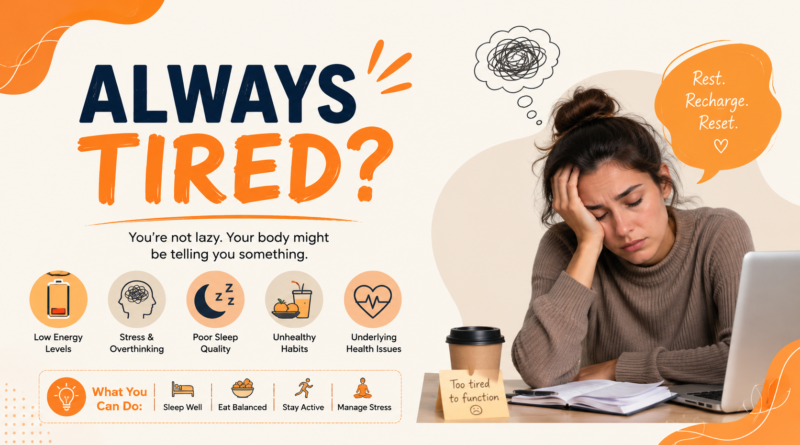
Constant tiredness can have many causes, from poor sleep and stress to diet, dehydration, medications, nutrient deficiencies, or underlying health problems.
1. You’re Not Getting Enough Quality Sleep
One of the first things to consider is your sleep. You may spend enough hours in bed but still wake up feeling stress. Poor sleep quality, regular nighttime use, caffeine, alcohol, and irregular routines may also disrupt your sleep
Try keeping a regular bedtime and wake time, as well as making your bedroom quiet, dark, and comfortable.
Give yourself time to relax before bed. If you wake up always tired daily, getting enough sleep and sleep problems could be affecting your sleep quality. Pay attention to side effects such as loud snoring or regular nighttime waking and consider discussing them with a healthcare expert.
2. You’re Stressed or Mentally Exhausted
Sometimes your body is tired because your mind has been working withtime.Deadlines, financial concerns, family responsibilities, relationship problems, and regular notifications can keep your brain in a state of tiredness. With time this can leave you feeling mental and physically tired
Stress can also affect sleep, motivation, and daily habits. And the fatigue problem of focusing, feeling overstressed, and sleep problems with possible effects on stress.
If stress may be contributing to your start, start small. Take short breaks during the day, practice slow breathing, spend a few minutes outside, exercise gently or make the relaxing evening routine
3. Your Diet May Be Missing Important Nutrients
What you eat can influence how regularly your body gets the nutrients it needs to function properly. Low levels of nutrients such as iron, vitamin B12, or vitamin D may contribute to fatigue and leave you always tired.
A diet that lacks variety may also leave you relying on fast sources of energy that don’t keep you full for long. In place of focusing only on people’s supplements, goals for a balanced eating pattern involve fruits, whole grains, protein sources, and healthy fats.
If you suspect a deficiency, ignore guessing or taking large doses of supplements without professional guidance. A healthcare provider expert can decide as your side effects warrant.
4. You’re Not Drinking Enough Water
Even mild dehydration can leave you always tired or less focused. Your body needs enough fluids to support normal functions, and not drinking daily may contribute to low energy.
Signs can involve dry mouth, darker urine, headaches, and thirst. Staying hydrated may also help if you feel always tired.
Keep water nearby and drink throughout the day instead of waiting until you feel very thirsty. Your fluid needs vary based on activity, diet, and overall health.
5. You’re Drinking Too Much Caffeine
Caffeine can temporarily increase alertness, but drinking too much or consuming it late in the day may interfere with your sleep. When sleep quality suffers, you may wake up tired and depend on more caffeine the following day, creating an ongoing cycle.
Coffee, tea, energy drinks, and some soft drinks can all contribute to your daily intake. If you regularly use caffeine to stay awake, try reducing it gradually to avoid headaches or irritability.
Avoid caffeine several hours before bedtime and choose water or herbal tea later in the day. You do not necessarily need to quit completely; moderate, well-timed use may help protect your sleep and energy.
6. You’re Not Getting Enough Physical Activity
It may seem surprising, but spending most of your day sitting can lead to feeling tired and sluggish. A sedentary routine may reduce your energy and make it harder to maintain healthy sleep and activity habits.
Daily movement can support your overall health and help you feel more energized. You do not need intense workouts to get started. Try walking, cycling, swimming, or taking short movement breaks during the day.
If you have been inactive, focus on regularity rather than intensity. Even a few minutes of movement can be a practical first step toward feeling more active and energetic
7. Your Blood Sugar May Be Affecting Your Energy
Your eating pattern can also affect how steady your energy feels throughout the day. Skipping meals may leave some people feeling weak and hungry; daily choosing foods high in added sugar may give a fast burst of energy followed by a feeling of tiredness
Rather than trying to detect yourself based on energy changes alone, pay attention to patterns and discuss concerning symptoms with a healthcare expert.
8. You May Have an Iron Deficiency or Anemia
Iron is important because your body uses it to make hemoglobin, a protein in red blood cells that helps transport oxygen.
When someone has iron-deficiency anemia, fatigue can occur together with symptoms such as weakness, shortness of breath, pale skin, or noticeable heartbeats.
People with certain dietary patterns, heavy menstrual bleeding, pregnancy, or some medical problem may have a greater risk of iron deficiency
If you have unexplained fatigue, don’t assume you need an iron supplement. Too much iron can be harmful and has many possible causes. A healthcare expert can determine as testing is a
If unexplained fatigue persists, don’t assume you need an iron supplement. Too much iron can be harmful, and fatigue has many possible causes. A healthcare professional can determine if testing is right.
9. A Thyroid Problem Could Be Causing Your Fatigue
Your thyroid produces hormones that help regulate several processes in your body. When the thyroid is underactive, known as low thyroid function, fatigue can be one of the symptoms.
You may also notice other changes, such as feeling unusually cold, constipation, dry skin, weight changes, or problems concentrating.
Because these side effects can overlap with many other problems, it is not possible to identify a thyroid problem from tiredness alone.
Healthcare expert can use your side effects, medical history, physical examination, and appropriate testing to explore possible thyroid problems
10. A Medication or Health Condition May Be Making You Tired
Sometimes the reason for your low energy is hiding in something you take every day. Make sure medications can cause drowsiness as a side effect. These may involve some sedating medications, pain medicine, and other prescriptions or non-prescriptions.
Other health problems can also cause this, including infections, sugar, kidney or heart conditions, and mental health problems such as stress or anxiety.
If your tiredness starts after starting or changing a medication, hand it to your healthcare expert. Do not stop a prescribed medication on your own.
11. You May Have an Underlying Sleep or Health Condition
Sometimes regularity has nothing to do with simply being lazy or needing another cup of coffee.
Sleep apnea, sleep, and narcolepsy can all interfere with normal sleep or daytime alertness.
Other problems involve depression, anxiety, long-term infections and long-term illness, which can also contribute to fatigue
If you have been asking yourself why you are always tired for weeks without finding an obvious explanation, consider talking with a healthcare expert rather than daily to push through it.
How to Stop Feeling Tired All the Time
Once you understand some of the possible causes, you can start making practical changes that support your overall energy and may help if you feel always tired
- Prioritize quality sleep: Maintain a regular bedtime and wake-up schedule and create a relaxing sleep environment.
- Stay hydrated: Drink enough water throughout the day to support energy and normal body functions.
- Eat balanced meals: Include protein, whole grains, fruits, vegetables, and other nutrient-rich foods.
- Move regularly: Add walking, stretching, or light exercise to your daily routine to improve energy levels.
- Manage stress: Take regular breaks, practice deep breathing, and make time for activities that help you relax.
What Tests Can Help Find the Cause of Fatigue?
There isn’t one universal fatigue test because tiredness can have many different causes.
A healthcare expert may begin by asking about your sleep, diet, stress, habits, side effects, medical history, and medications. They may also perform a physical examination.
Depending on what they find, blood tests may be considered to look for issues such as anemia, diabetes, or thyroid problems. The NHS specifically notes that blood testing may be used to investigate some causes of persistent tiredness.
The important point is that testing should be guided by your symptoms and clinical assessment rather than trying to order every possible test yourself.
Conclusion
There are many possible explanations for always tired, ranging from an irregular sleep schedule and stress to dehydration, deficiencies, medications, anemia, thyroid problems, sleep problems, or another underlying health problem.
I want to remind you that feeling stressed does not mean you are doing something wrong. Your body may be giving you useful signals that deserve attention. Start with manageable habits like improving your sleep habit, eating balanced meals, drinking fluids, and staying active.
If your fatigue is regular, stressful, or occurs with other concerning side effects, habit changes alone may not be enough. A healthcare expert can help identify the possible cause and suggest suitable solutions. You do not have to accept tiredness as normal; paying attention to changes in your energy is an important first step.