


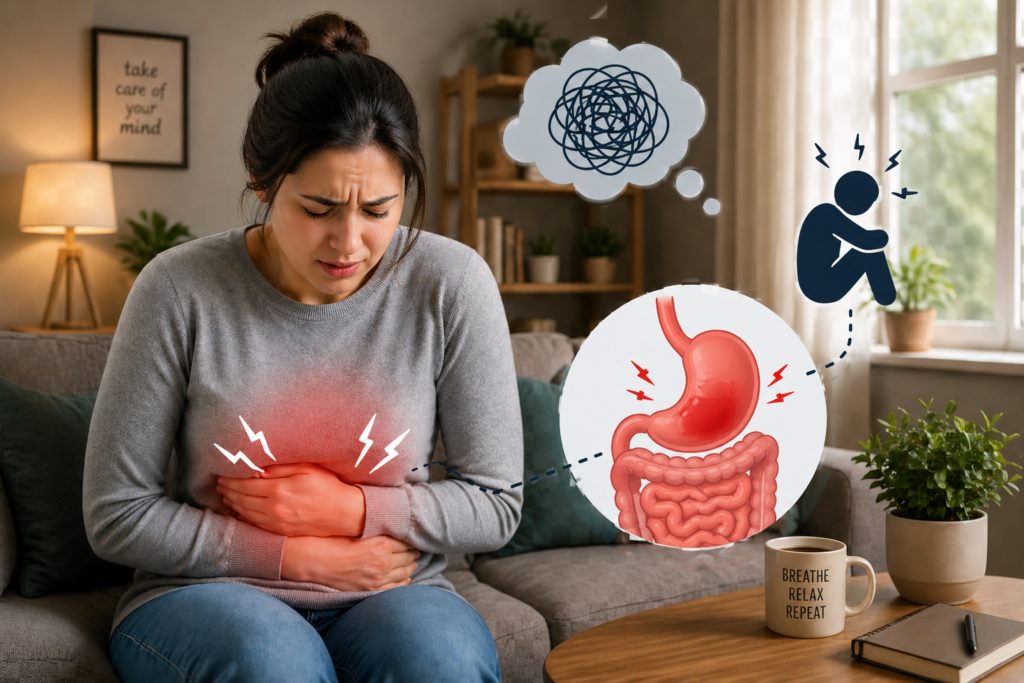
What Does Anxiety Stomach Pain Feel Like?
Have you ever noticed your stomach suddenly tightening before a stressful meeting, an uncomfortable conversation, or even right after waking up? That strange knot in your stomach is more common than people realize.
Anxiety stomach pain affects many people, but because the symptoms feel physical, it is often misunderstood.
I remember going through a phase where every morning started with stomach discomfort. I felt nauseous, heavy, and uneasy before I had even left my bed.
At first, I blamed late-night meals, poor digestion, or lack of sleep. But over time, I realized something deeper was happening; my stress was showing up in my stomach.
Learning how anxiety affects digestion helped me stop fearing the pain and start understanding the real reason behind it.
Why Anxiety Impacts Your Stomach
The connection between your brain and your digestive system is stronger than most people think. This relationship is often called the gut-brain axis.
When your mind feels anxious, your stomach reacts almost instantly. That is why anxiety stomach pain feels very real. It is not imaginary, and it is not “just stress.”
When anxiety rises, your body releases hormones like cortisol and adrenaline. These stress chemicals affect digestion by:
- tightening stomach muscles
- increasing stomach acid
- slowing digestion
- speeding up bowel movements
- causing nausea or cramping
This explains why some people experience bloating while others deal with diarrhea or sharp stomach pain.
What Does Anxiety Stomach Pain Actually Feel Like?
Everyone experiences anxiety stomach pain differently, but there are several common signs.
You may notice:
- a tight or knotted feeling in your stomach
- a heavy sinking sensation
- burning or acid reflux
- sudden stomach cramps
- bloating or pressure
- nausea
- stronger-than-normal butterflies
- reduced appetite
- an urgent need to use the bathroom
Some people describe it as stress stomach pain that appears before work, social events, or emotional situations. Others simply say, “my stomach hurts when I’m anxious.”
The unpredictable nature of these symptoms often makes anxiety feel even worse.
Stress Stomach Pain vs Digestive Disorders
Many people mistake stress stomach pain for food poisoning, ulcers, acid reflux, or IBS because the symptoms can look similar.
The biggest difference is the pattern.
With anxiety stomach pain, symptoms often increase during stressful periods and improve when life feels calm. Your stomach might feel normal during a peaceful weekend but suddenly hurt on Monday morning before work.
This is especially common with stomach discomfort in the morning, when stress hormones naturally rise after waking up.
I experienced this myself. Even on days when I barely ate, I still woke up feeling sick. It was not food causing the problem; it was anxiety starting before my day even began.
Does Anxiety Cause Diarrhea?
One of the most searched questions is: does anxiety cause diarrhea?
Yes, it definitely can.
When your body enters fight-or-flight mode, digestion changes quickly. In many people, the intestines speed up, leading to loose stools or urgent bathroom trips.
If you keep asking yourself, does anxiety cause diarrhea, especially before interviews, travel, or stressful events, the answer is often yes.
This type of anxiety stomach pain can feel embarrassing, but it is actually a very normal nervous system response.
Why Mornings Feel the Worst
For many people, symptoms are strongest first thing in the morning. Stomach discomfort in the morning may include the following:
- nausea
- cramping
- shaking
- loss of appetite
- heaviness in the stomach
This happens because cortisol levels are naturally highest after waking up. If your brain immediately starts thinking about pressure, deadlines, or fear, your digestive system responds fast.
I used to think I just hated mornings. Later, I realized my stomach was reacting to anxiety, not breakfast.
That awareness made a huge difference.
The Emotional Cycle of Anxiety Stomach Pain
Living with anxiety stomach pain can create a frustrating cycle.
You feel stomach pain. Then you worry about the pain. That worry increases anxiety, which creates even more pain.
This is especially true when your stomach hurts when I’m anxious, and you begin avoiding situations because you fear symptoms showing up in public.
You may cancel plans, skip meals, or constantly search symptoms online. That emotional pressure can become exhausting.
The important thing to remember is this:
Your symptoms are real.
Anxiety stomach pain is not imagined. Emotional stress creates physical reactions inside the body.
Can Medication Help?
Sometimes lifestyle changes are enough. In other cases, professional support is needed.
Doctors may suggest therapy, stress management, or medication depending on how severe the anxiety becomes.
Some people ask about Xanax and Ambien, especially when anxiety also affects sleep.
Xanax is commonly used for short-term anxiety relief, while Ambien is mainly prescribed for sleep problems. They do not directly treat digestive issues, but they may help if your anxiety stomach pain is connected to panic attacks or insomnia.
These medications should always be used under medical supervision because they can cause side effects and dependence.
Temporary relief helps, but understanding the root cause matters most.
Medication Side Effects vs Anxiety Symptoms
Sometimes people confuse anxiety-related stomach pain with medication side effects.
For example, conversations about lercanidipine vs amlodipine often happen when someone starts blood pressure medication and notices digestive discomfort.
Both medicines can affect the body differently, but their side effects are not the same as true anxiety stomach pain.
A simple way to check is to ask yourself:
- Does the pain get worse during stress?
- Does it happen before important events?
- Does it improve when I feel relaxed?
These answers often reveal whether anxiety is the real trigger.
Simple Ways to Reduce Anxiety-Related Stomach Pain
Managing anxiety stomach pain usually starts by calming your nervous system, not just your stomach.
Eat Light in the Morning
If you struggle with stomach discomfort in the morning, begin your day with light and easy-to-digest foods like bananas, toast, oatmeal, or yogurt.
These gentle options help calm your stomach, reduce nausea, and provide energy without putting extra stress on your digestive system early in the day.
Practice Slow Breathing
Deep breathing helps signal safety to your nervous system and reduces the physical symptoms of anxiety. Just five minutes of slow, controlled breathing can ease tightness, cramps, and stress stomach pain. It also helps lower your heart rate and brings a sense of calm to both mind and body.
Limit Caffeine
Too much caffeine can make anxiety symptoms stronger and upset your digestive system. Coffee may increase stomach cramps, nausea, acid reflux, and even diarrhea in sensitive people. Reducing caffeine intake, especially in the morning, can help your stomach feel calmer and improve overall anxiety control.
Track Your Triggers
Notice when your stomach hurts when I’m anxious and write down what happened before it started. Stress from work, social events, lack of sleep, or overthinking may be the cause. Tracking patterns helps you understand emotional triggers and manage symptoms more effectively over time.
Move Your Body
Gentle movement like walking, stretching, or yoga helps improve digestion and reduce anxiety at the same time. Physical activity lowers stress hormones and relaxes tight stomach muscles. Even a short daily walk can support your gut health and help your body feel more balanced.
Talk It Out
Sometimes your stomach is reacting to emotions your mind has not fully processed. Stress, fear, and hidden worries often show up physically. Talking to a trusted friend, therapist, or family member can release emotional pressure and help reduce the stomach pain caused by anxiety and stress.
When You Should See a Doctor
Even though anxiety stomach pain is common, long-lasting pain should never be ignored.
See a doctor if you experience:
- blood in stool
- unexplained weight loss
- frequent vomiting
- pain that wakes you at night
- symptoms that continue without stress triggers
Anxiety may be involved, but serious medical causes should always be ruled out.
Final Thoughts
Living with anxiety stomach pain can feel confusing because the symptoms are physical, but the cause often begins emotionally.
It can make you question your body and second-guess yourself.
I learned that healing began when I stopped asking, “What is wrong with my stomach?” and started asking, “What is my body trying to tell me?”
Sometimes the answer is not in your diet. Sometimes it is hidden in your stress, your overthinking, your daily pressure, and your need for rest.
If your anxiety-induced stomach keeps speaking, try listening with compassion instead of fear.
Because often, anxiety-induced stomach is not your body working against you—it is your body asking you to slow down.