


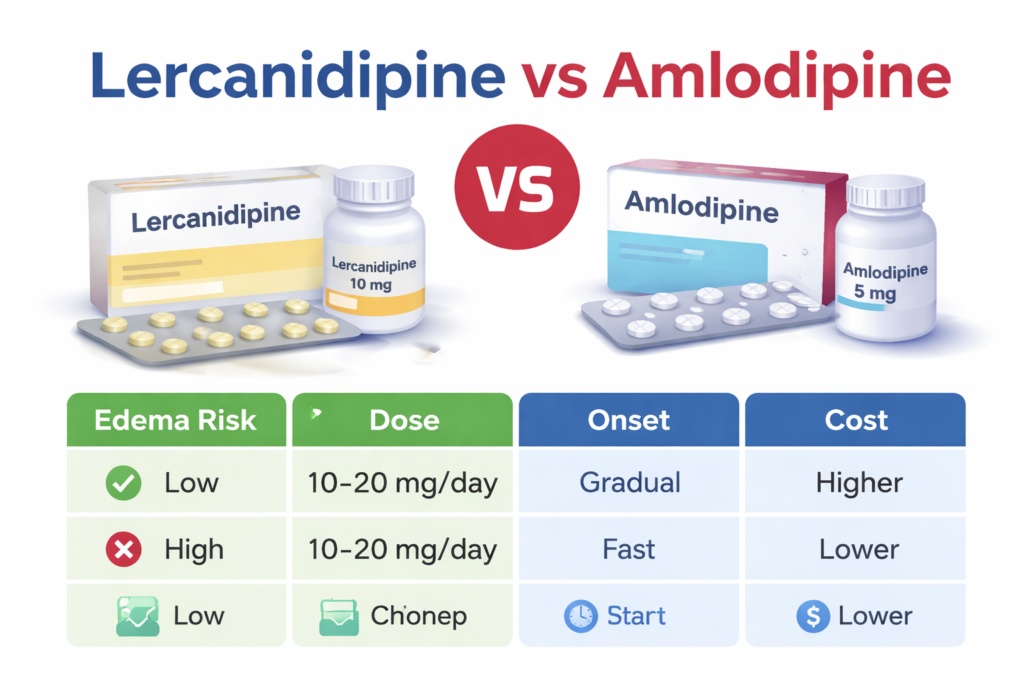
Lercanidipine vs Amlodipine: Which Blood Pressure Medication Is Better?
High blood pressure is one of the most common health conditions worldwide, and choosing the right medication plays a crucial role in managing it effectively. Among the widely prescribed options are calcium channel blockers like lercanidipine and amlodipine. But when comparing Lercanidipine vs amlodipine, which one stands out?
In this detailed guide, we’ll break down everything you need to know—from effectiveness and side effects to dosage and anxiety-related concerns—so you can better understand these medications.
What Are Lercanidipine and Amlodipine?
Both lercanidipine and amlodipine belong to a class of drugs called dihydropyridine calcium channel blockers. They work by relaxing blood vessels, allowing blood to flow more easily, which lowers blood pressure.
- Lercanidipine is a newer-generation medication known for its gradual action and fewer side effects.
- Amlodipine is an older, widely used drug with a strong track record for treating hypertension and angina.
When discussing Lercanidipine vs amlodipine, it’s important to note that both are effective—but their differences lie in tolerability and patient experience.
How Do They Work?
Both medications block calcium channels in the vascular smooth muscle, leading to vasodilation (widening of blood vessels). However, their pharmacological behavior differs slightly:
- Lercanidipine has a slower onset and longer-lasting action in the vessel walls.
- Amlodipine has a more systemic effect and longer half-life in the bloodstream.
This distinction becomes significant in the Lercanidipine and amlodipine comparison because it affects side effects and patient comfort.
Lercanidipine vs Amlodipine: Effectiveness
When it comes to lowering blood pressure:
-
Both drugs are equally effective in reducing systolic and diastolic blood pressure.
- Amlodipine is often preferred in severe hypertension due to its stronger systemic action.
- Lercanidipine may be ideal for mild to moderate hypertension.
In the debate of Lercanidipine vs amlodipine, studies suggest no major difference in blood pressure control, but patient satisfaction may differ.
Side Effects Comparison
One of the most important factors in choosing between these medications is side effects.
Amlodipine Common Side Effects:
- Swelling in ankles (edema)
- Headache
- Flushing
- Fatigue
Lercanidipine Common Side Effects:
- Mild dizziness
- Headache (less frequent)
- Less peripheral edema compared to amlodipine
A key highlight in the Lercanidipine and amlodipine comparison is that lercanidipine tends to cause less ankle swelling, making it a better option for patients sensitive to edema.
Lercanidipine and Anxiety: Is There a Link?
One emerging topic is lercanidipine and anxiety. While not a primary use, some patients report:
- Reduced physical symptoms of anxiety due to improved blood circulation
- Mild calming effects due to stable blood pressure
However, there is no strong clinical evidence that lercanidipine directly treats anxiety. It may indirectly help patients feel more relaxed by preventing blood pressure spikes.
In the broader context of Lercanidipine vs amlodipine, neither medication is officially prescribed for anxiety, but lercanidipine may feel gentler for some individuals.
Dosage Comparison
Lercanidipine Max Dose
- Starting dose: 10 mg once daily
- Lercanidipine max dose: 20 mg per day
Amlodipine Dosage
- Starting dose: 5 mg once daily
- Maximum dose: 10 mg per day
When evaluating Lercanidipine vs amlodipine, dosage flexibility is similar, but lercanidipine requires careful timing—it is usually taken before meals for optimal absorption.
Onset and Duration
- Amlodipine: Long half-life (30–50 hours), steady effect
- Lercanidipine: Shorter plasma half-life but prolonged action in blood vessels
In the Lercanidipine vs amlodipine comparison, amlodipine provides more consistent 24-hour coverage, while lercanidipine offers smoother vascular action.
Which Is Better for Elderly Patients?
Elderly patients often experience more side effects from medications.
- Amlodipine may cause more swelling and fatigue.
- Lercanidipine is generally better tolerated due to its gradual action.
This makes Lercanidipine vs amlodipine an important consideration in older populations, where comfort and adherence are key.
Drug Interactions
Both medications interact with:
- Grapefruit juice
- Certain antibiotics
- Antifungal medications
However, lercanidipine is more sensitive to food interactions, requiring consistent intake timing.
In the Lercanidipine vs amlodipine discussion, amlodipine is slightly more convenient for daily use due to fewer dietary restrictions.
Cost and Availability
- Amlodipine is widely available and generally cheaper.
- Lercanidipine may be more expensive and less commonly prescribed in some regions.
From a practical standpoint, Lercanidipine vs amlodipine often comes down to affordability and accessibility.
Who Should Choose Lercanidipine?
You may benefit more from lercanidipine if you
- Experience swelling with amlodipine
- Have mild to moderate hypertension
- Prefer a medication with fewer visible side effects
The Lercanidipine vs amlodipine comparison often favors lercanidipine for comfort and tolerability.
Who Should Choose Amlodipine?
Amlodipine may be better if you:
- Have severe hypertension
- Need long-lasting, stable blood pressure control
- Want a widely studied and trusted medication
In the Lercanidipine vs amlodipine debate, amlodipine remains a strong first-line choice in many clinical guidelines.
Key Differences at a Glance
| Feature | Lercanidipine | Amlodipine |
|---|---|---|
| Generation | Newer | Older |
| Edema Risk | Low | Higher |
| Cost | Higher | Lower |
| Dosing | Before meals | Flexible |
| Max Dose | 20 mg | 10 mg |
| Anxiety Impact | Mild indirect benefit | Minimal |
Final Verdict: Lercanidipine vs Amlodipine
When comparing Lercanidipine vs amlodipine, there is no one-size-fits-all answer.
- Choose lercanidipine for better tolerability and fewer side effects.
- Choose amlodipine for proven effectiveness and affordability.
Ultimately, your doctor will decide based on your health condition, age, and response to treatment.
Frequently Asked Questions
Is lercanidipine stronger than amlodipine?
No, both are equally effective in lowering blood pressure, but they differ in side effects and tolerability.
Can lercanidipine help with anxiety?
There is limited evidence, but some patients report reduced physical symptoms of anxiety.
What is the lercanidipine max dose?
The lercanidipine max dose is 20 mg per day.
Why does amlodipine cause swelling?
Amlodipine can cause fluid buildup in tissues due to blood vessel dilation.
Which is safer long-term?
Both are safe when used as prescribed, but lercanidipine may have fewer side effects over time.
What is Lercanidipine vs Amlodipine edema?
Both lercanidipine and amlodipine are calcium channel blockers used to treat high blood pressure, but they differ in how often they cause peripheral edema (swelling, especially in the ankles).
- Amlodipine is more likely to cause edema because it dilates blood vessels in a way that increases pressure in capillaries, leading to fluid leakage into surrounding tissues.
- Lercanidipine is more lipophilic and has a smoother, more gradual vasodilation effect, which reduces this capillary pressure buildup
Conclusion
The choice between these two medications depends on your individual needs. The comparison of Lercanidipine vs amlodipine highlights a balance between effectiveness and comfort. While amlodipine remains a trusted standard, lercanidipine is gaining popularity for its improved side effect profile.
If you’re experiencing issues with your current medication, consult your healthcare provider to determine whether switching is the right option.