What Are the 5 Types of Sleep Disorders?
What Are the 5 Types of Sleep Disorders?
Sleep is something we all need, but not everyone gets enough of it. In the millions of people struggle with falling asleep, staying asleep, or feeling rested after waking up. If you often feel tired, restless, or mentally drained, you’re not alone. Understanding the 5 types of sleep disorders can help you identify what’s really going on and how to fix it.
This guide is written with a personal touch because sleep problems don’t just affect your nights; they affect your entire life.
Why Sleep Problems Are So Common Today
Modern lifestyles have made quality sleep harder than ever. Long work hours, stress, social media, and irregular routines disrupt our natural sleep cycle. Over time, this leads to chronic sleep issues that can impact both physical and mental health.
Some people turn to medications like Ambien for quick relief, especially when insomnia becomes overwhelming. While that can help short term, understanding the root cause is the real solution.
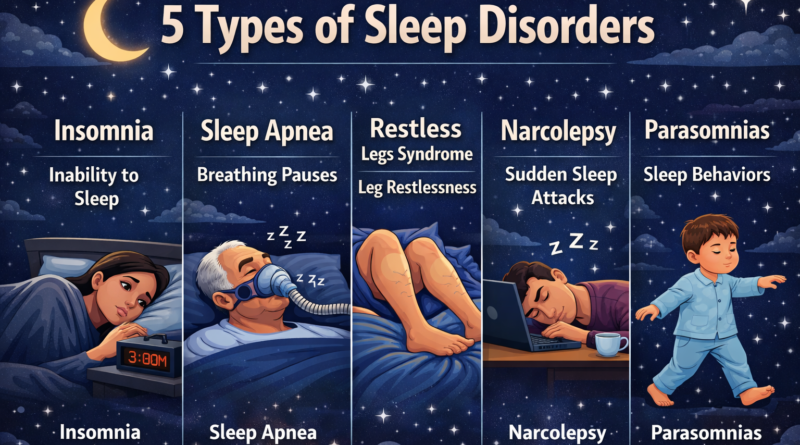
Let’s explore the 5 types of sleep disorders and how they show up in everyday life.
Insomnia – The Struggle to Fall or Stay Asleep
Insomnia is the most common issue among the 5 types of sleep disorders. It affects people of all ages and often becomes worse with stress or anxiety.
Common Symptoms:
- Difficulty falling asleep
- Waking up multiple times during the night
- Waking up too early
- Feeling tired even after a full night in bed
Real-Life Experience:
You’re exhausted after a long day, but as soon as your head hits the pillow, your mind starts racing. You replay conversations, worry about tomorrow, or scroll endlessly on your phone.
Causes:
- Stress and anxiety
- Poor sleep habits
- Excess screen time
- Caffeine or alcohol
Treatment:
- Better sleep routines
- Therapy (like CBT-I)
- Short-term medications such as Ambien
Insomnia is often the starting point when people begin exploring the 5 types of sleep disorders, because it’s so widespread.
Sleep Apnea – When Breathing Disrupts Sleep
Sleep apnea is one of the most serious conditions among the 5 types of sleep disorders. It causes your breathing to stop and start repeatedly during sleep.
Symptoms:
- Loud snoring
- Gasping for air at night
- Morning headaches
- Daytime fatigue
Real-Life Experience:
You might think you slept for 7–8 hours, but you wake up feeling exhausted. Your partner may notice pauses in your breathing before you do.
Health Risks:
- Heart disease
- High blood pressure
- Stroke
Treatment:
- CPAP machine
- Weight loss
- Lifestyle changes
Unlike insomnia, sleep apnea often goes undiagnosed for years, making it especially dangerous among the 5 types of sleep disorders.
Restless Legs Syndrome
Restless Legs Syndrome is a condition that creates an uncontrollable urge to move your legs, especially at night.
Symptoms:
- Tingling or crawling sensations
- Urge to move legs constantly
- Discomfort that worsens when lying down
Real-Life Experience:
You finally lie down after a long day, ready to sleep—but your legs feel restless. Moving them helps briefly, but the discomfort keeps coming back.
Causes:
- Iron deficiency
- Pregnancy
- Genetics
- Chronic diseases
Treatment:
- Iron supplements (if needed)
- Lifestyle changes
- Medication in severe cases
RLS is often overlooked but plays a major role in the 5 types of sleep disorders, especially for people who struggle to fall asleep.
Narcolepsy – Sudden Sleep Attacks
Narcolepsy is a neurological condition that affects your brain’s ability to control sleep cycles.
Symptoms:
- Sudden sleep attacks during the day
- Excessive daytime sleepiness
- Sleep paralysis
- Vivid dreams or hallucinations
Real-Life Experience:
Imagine feeling an uncontrollable urge to sleep while working, talking, or even driving. That’s the reality for people with narcolepsy.
Causes:
- Brain chemical imbalance
- Autoimmune issues
Treatment:
- Stimulant medications
- Scheduled naps
- Lifestyle adjustments
Among the 5 types of sleep disorders, narcolepsy is less common but extremely disruptive.
Parasomnias – Unusual Sleep Behaviors
Parasomnias involve abnormal behaviors during sleep. These are not about difficulty sleeping—but about what happens while you’re asleep.
Common Examples:
- Sleepwalking
- Night terrors
- Sleep talking
- Acting out dreams
Real-Life Experience:
You wake up confused—or someone tells you that you walked around or talked in your sleep without remembering it.
Causes:
- Stress
- Sleep deprivation
- Medications
- Neurological factors
Treatment:
- Improving sleep hygiene
- Reducing stress
- Medical consultation if severe
Parasomnias complete the 5 types of sleep disorders, showing that sleep issues go beyond just insomnia.
The Emotional Side of Sleep Disorders
Sleep disorders don’t just affect your body—they affect your mind and emotions too.
- You feel irritable and unfocused
- Your productivity drops
- Anxiety and depression increase
- Relationships become strained
Many people normalize poor sleep, thinking it’s just part of life. But understanding the 5 types of sleep disorders can help you realize that your struggles are valid—and treatable.
The Role of Ambien in Sleep Treatment
For people dealing with severe insomnia, medications like Ambien are often prescribed.
How It Helps:
- Slows brain activity
- Helps you fall asleep faster
- Improves short-term sleep quality
Important Considerations:
- Not meant for long-term use
- Can lead to dependency if misused
- Should only be taken under medical supervision
While it can be helpful, medication should be combined with lifestyle changes when addressing the 5 types of sleep disorders.
Natural Ways to Improve Sleep
If you want to improve your sleep without relying fully on medication, start with these simple strategies:
Stick to a Sleep Schedule
Go to bed and wake up at the same time daily.
Reduce Screen Time
Avoid screens at least one hour before bed.
Watch Your Diet
Limit caffeine and heavy meals at night.
Create a Relaxing Environment
Keep your room dark, quiet, and cool.
Manage Stress
Try meditation, breathing exercises, or journaling.
These habits can significantly improve symptoms related to the 5 types of sleep disorders over time.
When to See a Doctor
You should seek medical help if:
- Sleep problems last more than a few weeks
- You feel constantly tired during the day
- You experience breathing issues during sleep
- Your sleep affects daily functioning
Early treatment can prevent long-term complications.
Final Thoughts
Sleep is not a luxury—it’s a necessity. When it’s disrupted, everything in life feels harder. The good news is that once you understand the 5 types of sleep disorders, you can start taking control of your sleep again.
Whether it’s insomnia keeping you awake, sleep apnea affecting your breathing, or restless legs making it impossible to relax, solutions exist. You’re not alone in this struggle—and better sleep is absolutely possible.
Start small, stay consistent, and don’t ignore the signs your body is giving you. Your future self will thank you for it.